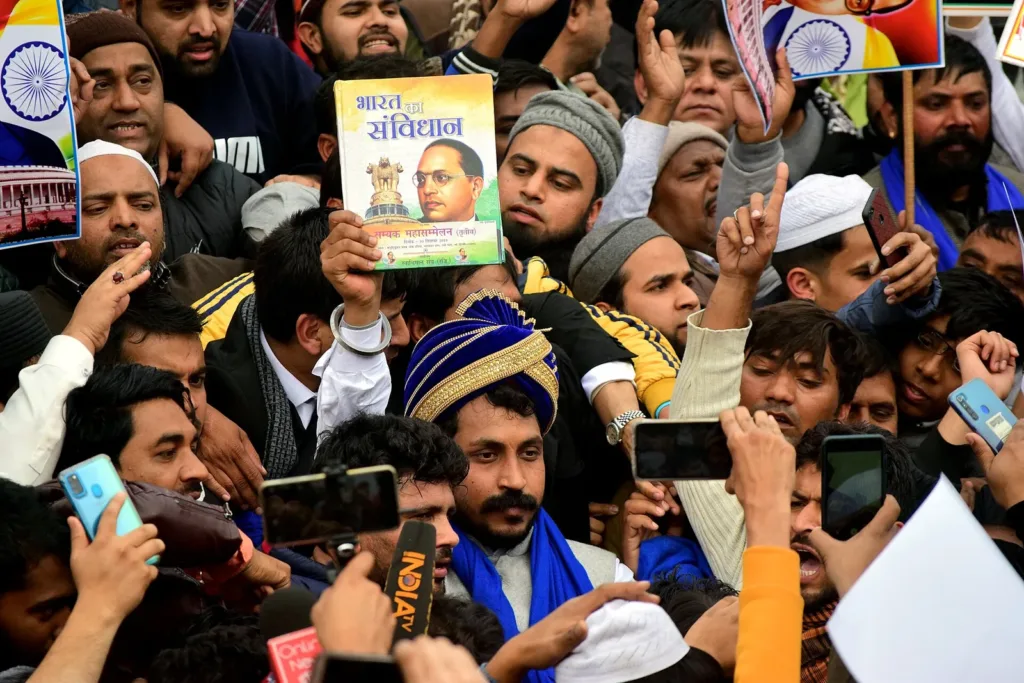
Representative image. Shakeeb kpa, CC BY-SA 4.0, Wikimedia Commons

हिन्दी में सारांश Summary in Hindi
- सदुद्दीन ओवैसी और चंद्रशेखर आजाद ने यूपी में सामाजिक परिवर्तन मोर्चा का गठन किया।
- नगीना सांसद चंद्रशेखर आजाद 2027 विधानसभा चुनाव में गठबंधन के मुख्यमंत्री उम्मीदवार होंगे।
- धिक सीटों पर चुनाव लड़ने की तैयारी कर रहा है।
বাংলায় সারাংশ Summary in Bangla
- আসাদউদ্দিন ওয়াইসি এবং চন্দ্রশেখর আজাদ উত্তরপ্রদেশে সামাজিক পরিবর্তন মোর্চা গঠন করেছেন।
- নগিনা সাংসদ চন্দ্রশেখর আজাদ ২০২৭ বিধানসভা নির্বাচনে জোটের মুখ্যমন্ত্রী পদপ্রার্থী হবেন।
- এই মোর্চা উত্তরপ্রদেশের ২০০টিরও বেশি বিধানসভা আসনে প্রতিদ্বন্দ্বিতা করার পরিকল্পনা করছে।
Why it matters
Uttar Pradesh has 403 assembly constituencies where Dalit and Muslim voters play a decisive role in dozens of seats. A united front between AIMIM and the Azad Samaj Party creates a dedicated political vehicle for these groups, potentially shifting traditional vote banks away from both the Samajwadi Party and the BSP.
The owaisi azad up alliance took formal shape on Thursday, 12 November 2026, as All India Majlis-e-Ittehadul Muslimeen (AIMIM) president Asaduddin Owaisi and Azad Samaj Party (Kanshiram) chief Chandrashekhar Azad announced the launch of the Samajik Parivartan Morcha in Lucknow. Addressing a joint press conference in the state capital, Owaisi named Azad, the sitting Lok Sabha Member of Parliament from Nagina, as the coalition’s Chief Ministerial candidate for the 2027 Uttar Pradesh Assembly elections. The two leaders confirmed that the front aims to bring together marginalised communities and contest more than 200 of the 403 seats in the Uttar Pradesh Vidhan Sabha.
How the Owaisi Azad UP alliance was formed in Lucknow
Both leaders arrived separately in Lucknow on Thursday morning before appearing together to formalise the owaisi azad up alliance. The joint press appearance followed weeks of informal discussions between representatives of both parties regarding campaign priorities, seat allocations and candidate selection benchmarks for the upcoming uttar pradesh elections 2027.
Owaisi stated that the primary objective of the coalition is to provide a viable political alternative for Scheduled Castes, Other Backward Classes and minority communities, who he argued have long been treated merely as vote banks by mainstream parties. The Hindu reported that Owaisi explicitly pitched the Samajik Parivartan Morcha as a strong front to prevent the Bharatiya Janata Party from returning to office in Uttar Pradesh for a third consecutive term.
During the press briefing, Owaisi emphasised that Chandrashekhar Azad would lead the front from the front as both its chief president and its chief ministerial face. Azad, who won the Nagina parliamentary seat in western Uttar Pradesh during the 2024 general elections as an independent force, affirmed that the platform is dedicated to social transformation rather than conventional electoral arithmetic. Azad pointed out that successive state administrations had repeatedly pledged empowerment for Bahujan communities while failing to deliver tangible improvements in basic welfare, healthcare, rural connectivity, irrigation access and local schooling.
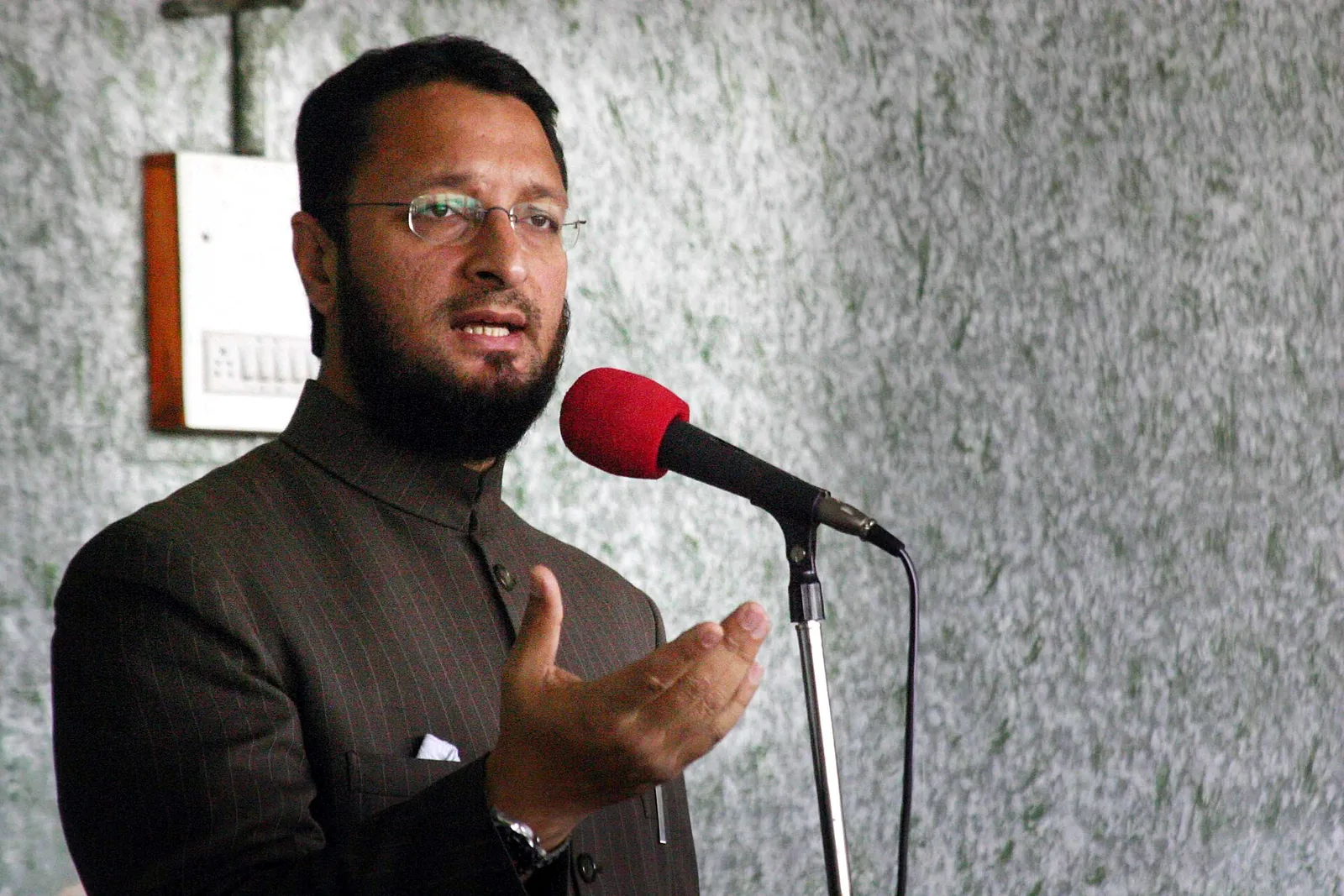
Seat sharing matrix and targeted constituencies across Uttar Pradesh
Under the proposed framework of the owaisi azad up alliance, the coalition plans to focus its organizational machinery on assembly seats with concentrated Dalit and Muslim populations. In Uttar Pradesh, Dalits constitute an estimated 21% of the population, while Muslims represent approximately 19%, giving the two demographic groups significant electoral influence across Rohilkhand, the Doab region and parts of eastern Uttar Pradesh. The Economic Times reported that Azad Samaj Party is expected to contest around 150 constituencies, while AIMIM is eyeing 40 to 50 seats, leaving room for smaller regional organisations to join the front.
The Azad Samaj Party has already moved ahead by declaring its candidates for an initial batch of 87 assembly constituencies. An analysis of the declared candidate list reveals a deliberate focus on broad social representation rather than a single caste category. Of the 87 announced candidates, 38 belong to Scheduled Castes, 29 represent Other Backward Classes, 19 are from the Muslim community, and one is from the Sikh community. This early candidate rollout demonstrates the alliance’s intention to build grassroots campaign structures well before the official election cycle begins.
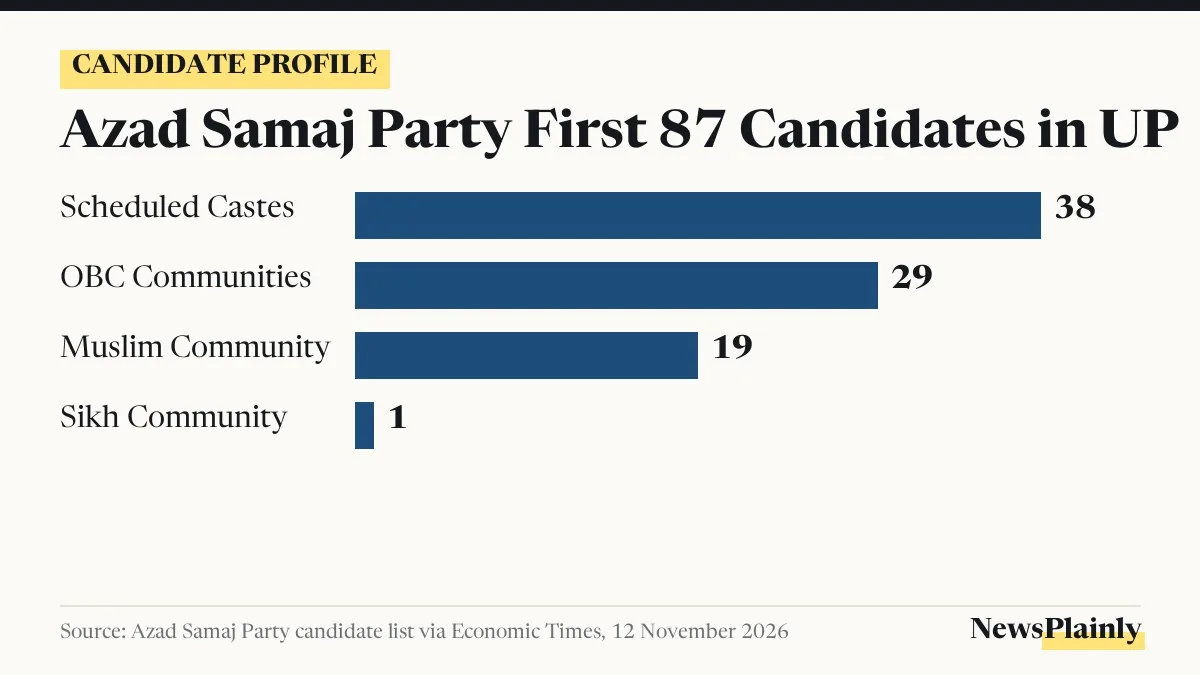
To help readers assess the demographic landscape that the Samajik Parivartan Morcha is targeting, the table below compares the social composition of the declared candidates with state population estimates and coalition planning targets.
| Community Group | ASP Candidates (of 87) | Candidate Share | UP Population Share (Approx.) |
|---|---|---|---|
| Scheduled Castes | 38 | 43.7% | 21.1% |
| Other Backward Classes | 29 | 33.3% | 40.0% to 45.0% |
| Muslim Community | 19 | 21.8% | 19.3% |
| Sikh Community | 1 | 1.1% | 0.3% |
| Total Initial Rollout | 87 | 100.0% | Statewide Benchmark |
Impact on Uttar Pradesh political arithmetic and opposition dynamics
The formalisation of the owaisi azad up alliance injects a new variable into the bipolar electoral dynamic that characterized the 2024 parliamentary elections in Uttar Pradesh. In that contest, a substantial consolidation of Dalit and minority votes behind the Samajwadi Party and Congress alliance helped the opposition secure notable victories against the ruling National Democratic Alliance. Meanwhile, the Bahujan Samaj Party experienced a sustained contraction in vote share across its traditional strongholds, creating an opening for newer leadership figures such as Azad to establish regional credibility.
Political observers in Lucknow note that the new front presents distinct strategic calculations for all major political players. While the coalition seeks to consolidate votes that might otherwise scatter, regional analysts caution that fielding candidates in multi-cornered contests risks dividing anti-incumbency ballots in closely fought constituencies.
However, Azad addressed this question directly during Thursday’s press briefing, stating that the Samajik Parivartan Morcha remains open to constructive discussions with both the Samajwadi Party and the Congress if they demonstrate a genuine commitment to defeating the BJP. Readers tracking regional administrative and political changes can also review earlier Uttar Pradesh state initiatives to understand how policy outreach has shaped local communities.
What happens next as the 2027 state campaign approaches
Following the Lucknow announcement, the Samajik Parivartan Morcha will begin establishing joint coordination committees across all 75 districts of Uttar Pradesh. Party functionaries from both AIMIM and the Azad Samaj Party are scheduled to conduct joint workers conventions starting with western Uttar Pradesh districts including Saharanpur, Muzaffarnagar, Meerut and Moradabad. These gatherings will focus on booth-level voter mobilization, local volunteer recruitment and finalizing candidate selections for the remaining targeted assembly seats.
The coalition also plans to formulate a comprehensive common minimum programme addressing rural job guarantees, student scholarship disbursals, agricultural support prices and civic services in urban nagar nigam municipal areas. Party organizers have noted that regional conventions will also feature local community meetings in central and eastern districts including Ayodhya, Azamgarh, Gorakhpur and Varanasi. While the formal notification for the 2027 Uttar Pradesh Assembly elections is still months away, the early establishment of the owaisi azad up alliance indicates that regional parties are initiating ground campaigns far in advance of the scheduled poll calendar, setting up an intense contest for grassroots voter loyalty.