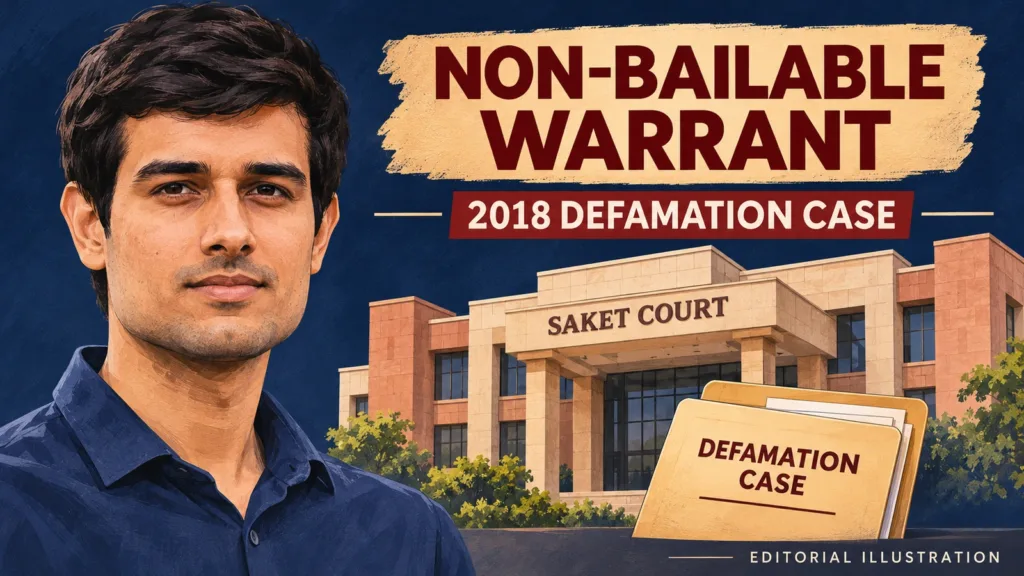
AI-generated editorial illustration by NewsPlainly of Dhruv Rathee and a symbolic courthouse for the reported Saket court warrant in a 2018 defamation complaint. Not a photograph of the court, an arrest or the proceedings; the warrant is not a finding of guilt.
Why it matters
A non-bailable warrant is a procedural step, not a verdict. The record so far shows how a case from 2018 moved from summons to warrants, and the next hearing is the date that decides what follows.
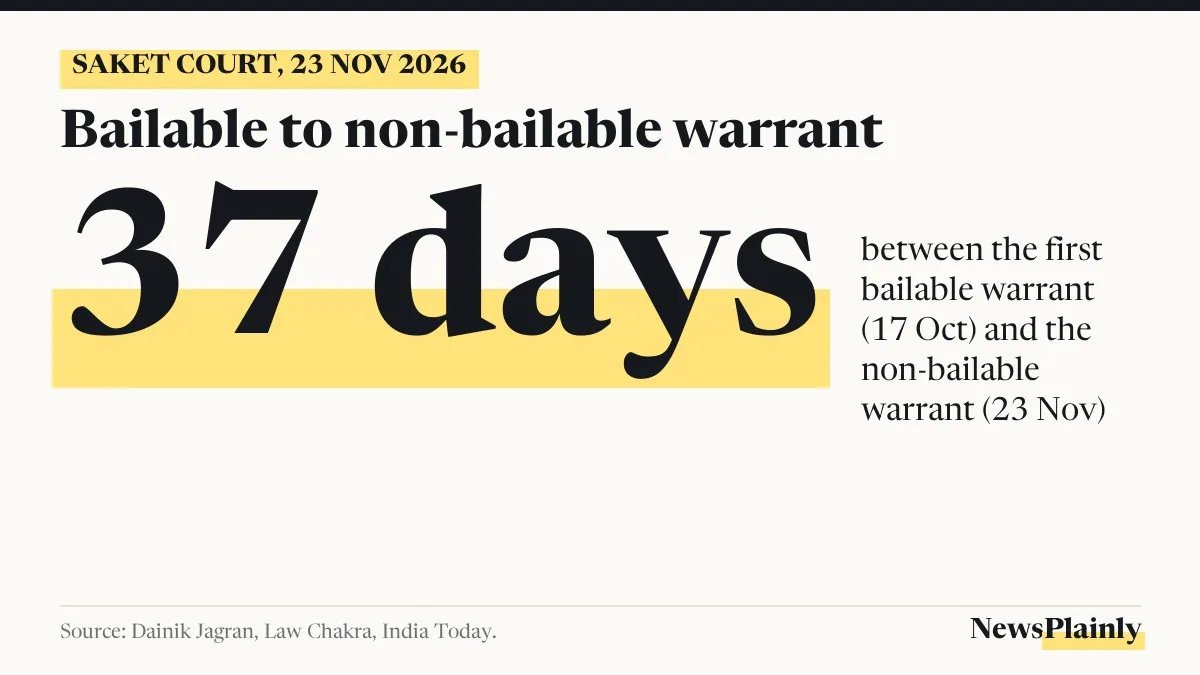
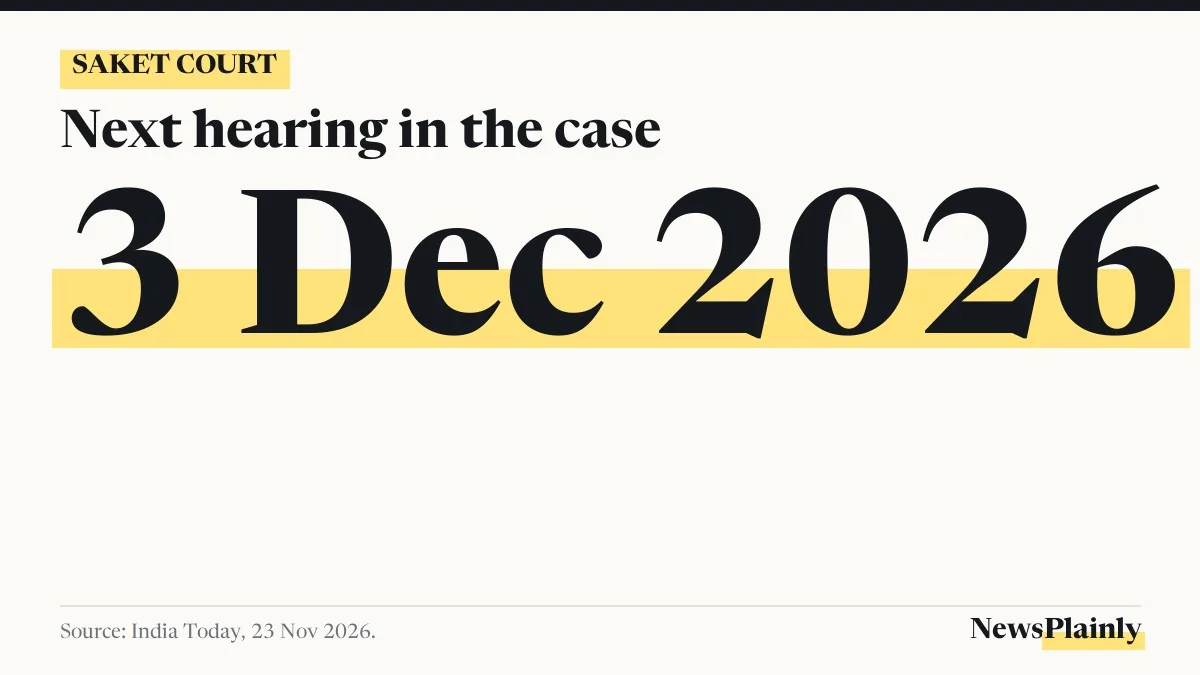
A Delhi court on Monday, 23 November 2026, issued a non-bailable Dhruv Rathee warrant in a 2018 criminal defamation complaint, India Today reported. The Saket court order, by Judicial Magistrate First Class Anam Raees Khan, follows summons, bailable warrants on 17 October and fresh ones on 31 October. The next hearing is on 3 December 2026.
The Dhruv Rathee warrant is a court order to secure his appearance, not a finding on the complaint. The reports we read carry no response from Rathee to this order.
What the 2018 complaint says
The complainant is Vikas Pandey, also known as Vikas Sankrityayan, founder of the Facebook page “I Support Narendra Modi”. He says a May 2018 YouTube video, “BJP IT Cell Part II” (“Part 2” in some reports), made false and defamatory claims about him. The Week says the video alleged that BJP IT Cell members had tried to bribe Pandey to defame him. These are allegations in a private complaint; Law Chakra noted that the court has expressed no view on the merits.
Arvind Kejriwal, then Delhi’s Chief Minister, retweeted the video and later apologised before the Supreme Court, in February 2024, Law Chakra reports. The proceedings against Rathee, as the video’s maker, continued before the magistrate. We covered a different long-running defamation case in Rahul Gandhi defamation case: court acquits him.
How summons turned into a warrant, step by step
| Date | Step, as reported |
|---|---|
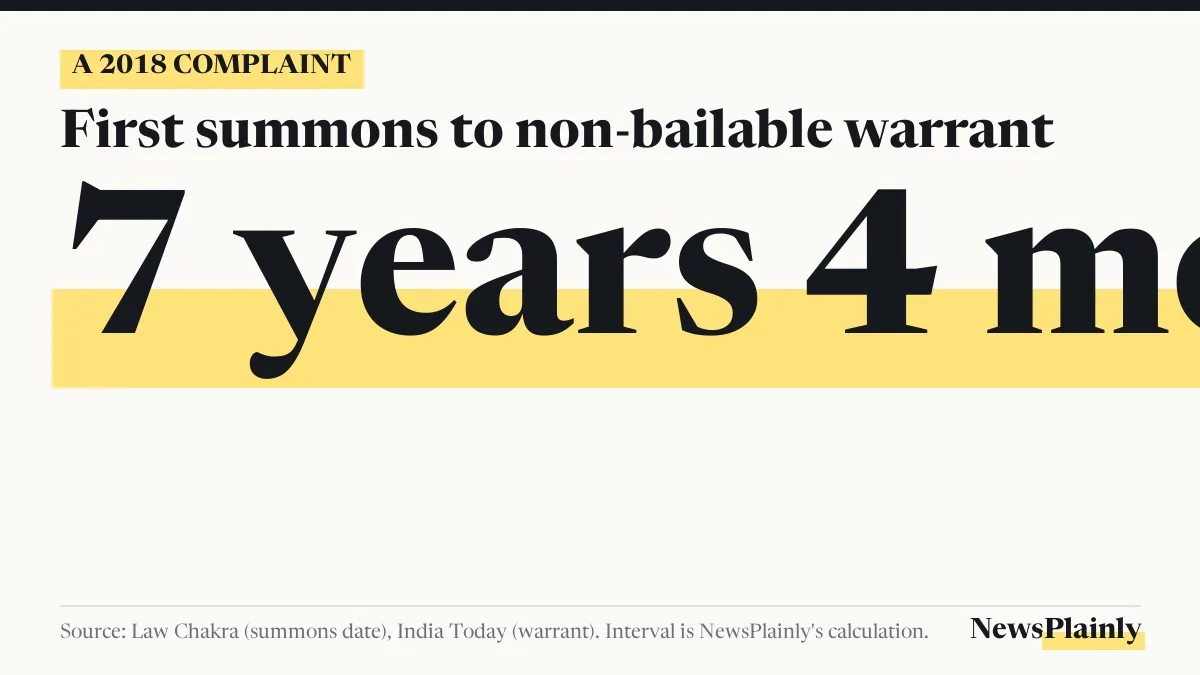
| 23 July 2019 | First summons order against Rathee; service stays stuck for years (Law Chakra) |
| 12 October 2026 | Magistrate Rahul Jain orders fresh summons on the complainant’s plea; the complainant’s lawyer says Rathee usually lives in Austria and is in India (Law Chakra) |
| 17 October | Bailable warrants after a process server found his residence locked (The Week, Law Chakra) |
| 31 October | Fresh bailable warrants (Law Chakra) |
| 23 November | Non-bailable warrant, 37 days after the first bailable warrant (Dainik Jagran, India Today) |
| 3 December | Next hearing (India Today) |
The reports differ on details. Dainik Jagran says Rathee’s lawyer told the court on 17 October that he had gone to London and could not appear in person, and alleges that Rathee refused a notice when contacted by phone, after which the summons was pasted outside his Gurugram home. The Week says the warrant followed the locked premises, and that Rathee posted on X that he had reached London. India Today says he is now in Germany and cites difficulties in his appearance and in serving the warrants. Law Chakra’s 31 October report says the next date had not been stated, so the 3 December date rests on India Today.
What the Dhruv Rathee warrant means
A bailable warrant directs police to produce a person in court but lets them be released on a bond. A non-bailable warrant does not carry that option, so police can arrest the person and present them before the court. Courts use it when summons and bailable warrants have not secured an appearance. The person can still appear, including through a lawyer, and ask the court to recall or cancel the warrant; the court then decides. The reports do not say whether Rathee’s lawyers have done so.
India Today links the news to Rathee’s October visit to India, where he joined the Cockroach Janta Party’s protest against Chief Election Commissioner Gyanesh Kumar over the Special Intensive Revision of electoral rolls. He was detained from his Gurugram home on 10 October ahead of a Jantar Mantar protest and released at about 3 am on 11 October, per Gurugram Police sources. Rathee said in a video that he had been “kidnapped”. That account is his own; the Saket warrant concerns the 2018 complaint, not that detention. For the police side of such protests, see our report Jantar Mantar protest: police tell SC.
Some points are not in the reports we read. India Today names Anam Raees Khan as the magistrate for Monday’s order, while the October orders were by Rahul Jain, and neither report explains the change. The reports also do not give the terms on which police must act, or say whether anyone appeared for Rathee on Monday.
What to watch on 3 December
The next hearing will show whether Rathee appears through counsel or whether the court takes the warrant further. Whether the video was defamatory remains to be decided, and he is presumed innocent. The reports do not say how he will respond.
Frequently asked questions
What is a non-bailable warrant?
A court order directing police to arrest a person and bring them before the court. The person can appear through a lawyer and ask the court to recall it.
What is the 2018 case about?
A criminal defamation complaint by Vikas Pandey over Rathee's video 'BJP IT Cell Part II'. It has not been decided.
When is the next hearing?
3 December 2026, India Today reported.