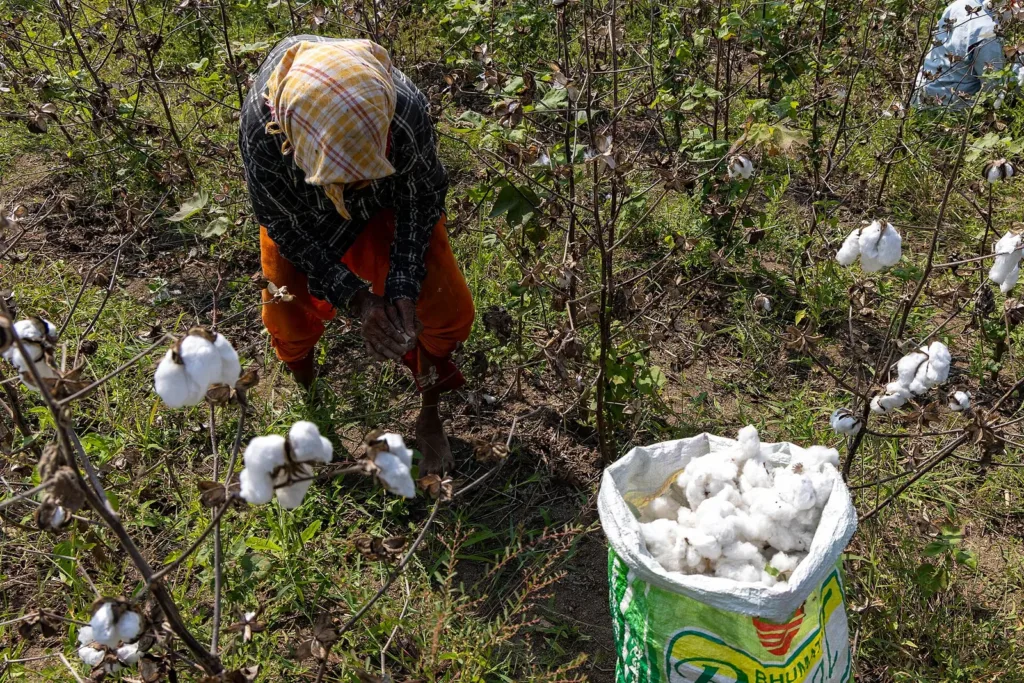
Representative image. Nanditha Gogate, WELL Labs, CC BY-SA 4.0, Wikimedia Commons

Why it matters
Cotton is the main raw material for India's spinning mills and garment units, and the waiver keeps imported fibre free of the 11% duty for two more months. It comes as the domestic crop is expected to be smaller after lower planting and drought, BusinessLine reported.
Textile mills can keep importing cotton without paying customs duty for two more months. The Finance Ministry has extended the cotton import duty exemption to 31 December 2026 through a notification issued on Friday, 30 October, BusinessLine and NDTV Profit reported. The waiver, which removed an 11% duty on imported cotton from 1 June, was due to end on 31 October.
The ministry said the longer window should lower input costs across the textile and apparel sector and help small and medium enterprises by keeping more cotton available in the market, according to NDTV Profit. It added that the decision kept the interests of domestic farmers in mind.
What the cotton import duty notification changes
The legal change is small: one date. Notification No. 35/2026-Customs amends an earlier exemption, No. 19/2026-Customs of 30 May 2026, and replaces its 31 October end date with 31 December 2026, NDTV Profit reported. The government used its power under Section 25(1) of the Customs Act, 1962, which lets it exempt goods from duty by notification, read with Section 124 of the Finance Act, 2021, the report said.
In practice, cotton that clears customs in November and December gets the same zero-duty treatment as cotton that arrived between June and October. Without the extension, the 11% duty would have applied again from 1 November.
The Hindu described the textile industry as the largest consumer of cotton, and the textile industry is the main gainer. Spinning mills turn raw cotton into yarn, and yarn feeds weaving, knitting and garment units further down the chain.
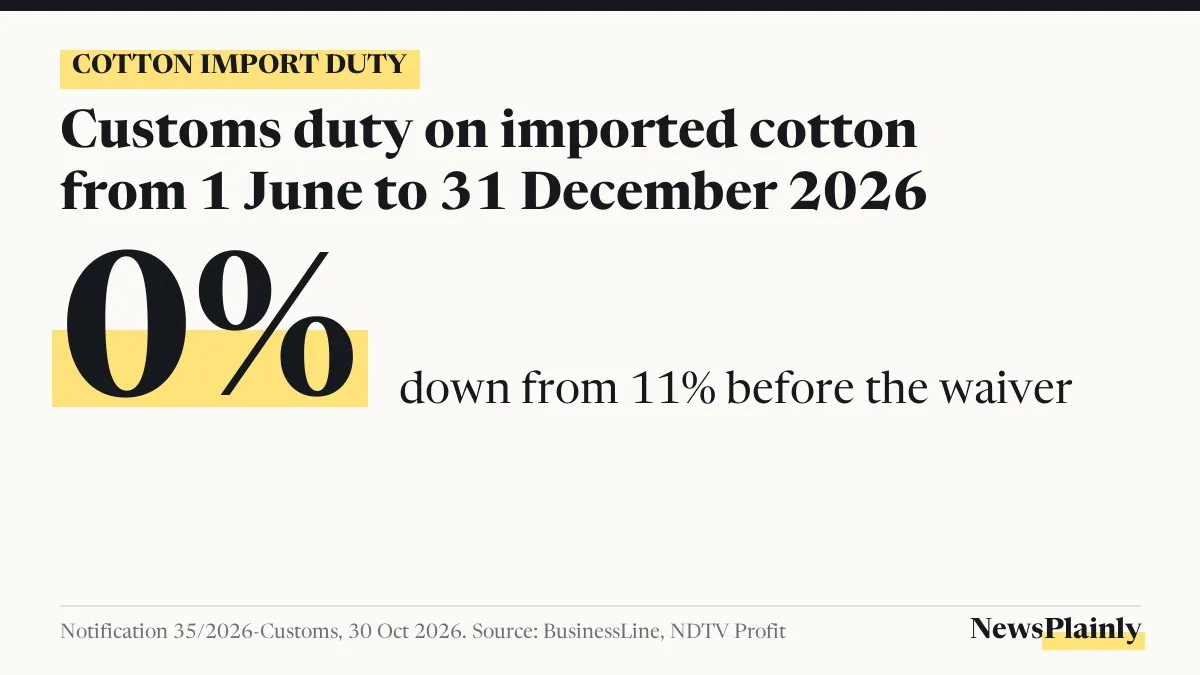
What the 11% cotton duty exemption is worth
The government has not put a rupee figure on the relief in the reports read. A simple illustration shows the scale for a buyer. On a cotton consignment valued at ₹10 lakh at the port, an 11% duty comes to ₹1.1 lakh. Under the exemption, that ₹1.1 lakh is not charged.
This is NewsPlainly’s simplified illustration, not an official estimate. Actual customs duty is worked out on an assessable value that includes freight and insurance, so real bills vary from shipment to shipment. The point is the proportion: for every ₹100 of imported cotton, ₹11 of duty is waived until the end of December.
Why the cotton duty exemption was extended now
Supply is the worry. The extension comes amid concern that domestic cotton will be tighter in the 2026-27 season, BusinessLine reported, because farmers planted a smaller area and drought in parts of key growing states such as Maharashtra and Karnataka has hurt the crop.
Maharashtra’s drought has already drawn state relief for farmers: its cabinet cleared a ₹5,000 advance for 1.5 crore farmers, as NewsPlainly reported on 27 October.
Mill owners have been pushing for more than a temporary waiver. In September, the Southern India Mills’ Association (SIMA), which represents spinning mills, asked the Centre to remove the 11% import duty permanently to control swings in cotton prices, The Hindu reported. Its chairman, Durai Palaniswamy, also said the Cotton Corporation of India (CCI), the state agency that buys cotton from farmers, should hold large reserve stocks the way China’s national cotton reserve does.
The ministry’s notification does not go that far. It moves the end date by two months, and the reports read do not say whether the waiver will be extended again after December.
Timeline of the cotton import duty waiver
| Date | What happened | Source |
|---|---|---|
| 30 May 2026 | Notification No. 19/2026-Customs exempts cotton imports from duty | NDTV Profit |
| 1 June 2026 | The 11% duty stops applying | BusinessLine |
| 22 September 2026 | SIMA asks for the duty to be removed permanently | The Hindu |
| 30 October 2026 | Notification No. 35/2026-Customs extends the waiver | NDTV Profit, BusinessLine |
| 31 December 2026 | New end date of the exemption | Finance Ministry, via reports |
What it means for cotton farmers and textile units
For mills and small garment units, the extension means two more months of duty-free access to imported fibre at a time when the home crop is under pressure. The ministry linked this directly to small and medium enterprises.
For cotton farmers the picture is less clear. The ministry said their interests were kept in mind, but the reports read did not explain how. They did not include comment from farmer groups on the extension, and none of them gave import volumes for the June to October period, so the effect on prices cannot be measured from them.
The next date to watch is 31 December. After that date the 11% duty is due to apply again, unless the government issues another notification.
Frequently asked questions
Till when is cotton import duty exempt?
Until 31 December 2026, under Notification No. 35/2026-Customs issued on 30 October 2026. It was earlier due to end on 31 October.
How much is the import duty on cotton?
11%, BusinessLine reported. It has not applied since 1 June 2026 and will stay off until 31 December.
Why did the government extend the cotton duty exemption?
The Finance Ministry said it would lower input costs for the textile and apparel sector and improve cotton availability, especially for small and medium units, while keeping farmers' interests in mind.