Representative image. Photo by Ranjit Bhaskar for Al Jazeera English, CC BY-SA 2.0, Wikimedia Commons

हिन्दी में सारांश Summary in Hindi
- भारत निर्वाचन आयोग ने विशेष संक्षिप्त पुनरीक्षण 2027 के तहत 16 राज्यों और केंद्र शासित प्रदेशों में प्रारूप मतदाता सूची प्रकाशित कर दी है।
- पने दावे और आपत्तियां दर्ज करा सकते हैं।
- पना नाम जुड़वा सकते हैं।
বাংলায় সারাংশ Summary in Bangla
- ঞ্চলে খসড়া ভোটার তালিকা প্রকাশ করেছে।
- নাগরিকরা আগামী ১১ ডিসেম্বর ২০২৬ পর্যন্ত তাদের দাবি ও আপত্তি জমা দিতে পারবেন।
- ১ জানুয়ারি ২০২৭ তারিখে যাদের বয়স ১৮ বছর পূর্ণ হবে, তারা ফর্ম ৬ পূরণ করে নাম নথিভুক্ত করতে পারেন।
Why it matters
The month-long revision window offers citizens an essential opportunity to verify voting eligibility and restore names removed during previous intensive cleansing drives.
Electoral authorities across the country have launched the annual democratic revision cycle, as the Election Commission of India (ECI) published its ECI draft voter rolls across 16 states and Union territories on Thursday. The publication initiates a nationwide month-long public consultation period under the Special Summary Revision (SSR) 2027 framework. Eligible residents who turned 18 or whose names were omitted during earlier verification drives now have a defined window to file claims and ensure their democratic franchise remains intact before final lists are sealed.
The widespread rollout originally planned to cover 17 jurisdictions with a qualifying cut-off date of 1 January 2027. However, the ECI draft voter rolls currently cover 13 major states and three Union territories, following a procedural decision by Uttar Pradesh to defer its publication by five days to 17 November. Voters in the active jurisdictions have until 11 December 2026 to submit corrections, additions, and objections. In Uttar Pradesh, the claims window will remain open until 16 December to provide local residents an equivalent review period before final lists are compiled.
State-level coverage and population trends in the ECI draft voter rolls
The release of the ECI draft voter rolls marks the first systematic roll update in most states since the completion of the rigorous Special Intensive Revision (SIR). Under that intensive exercise, municipal and rural registers were thoroughly audited, leading to the removal of millions of deceased, relocated, or duplicate records. As a consequence, the newly released draft figures show modest net additions rather than rapid expansions, reflecting a stabilized electoral registry.
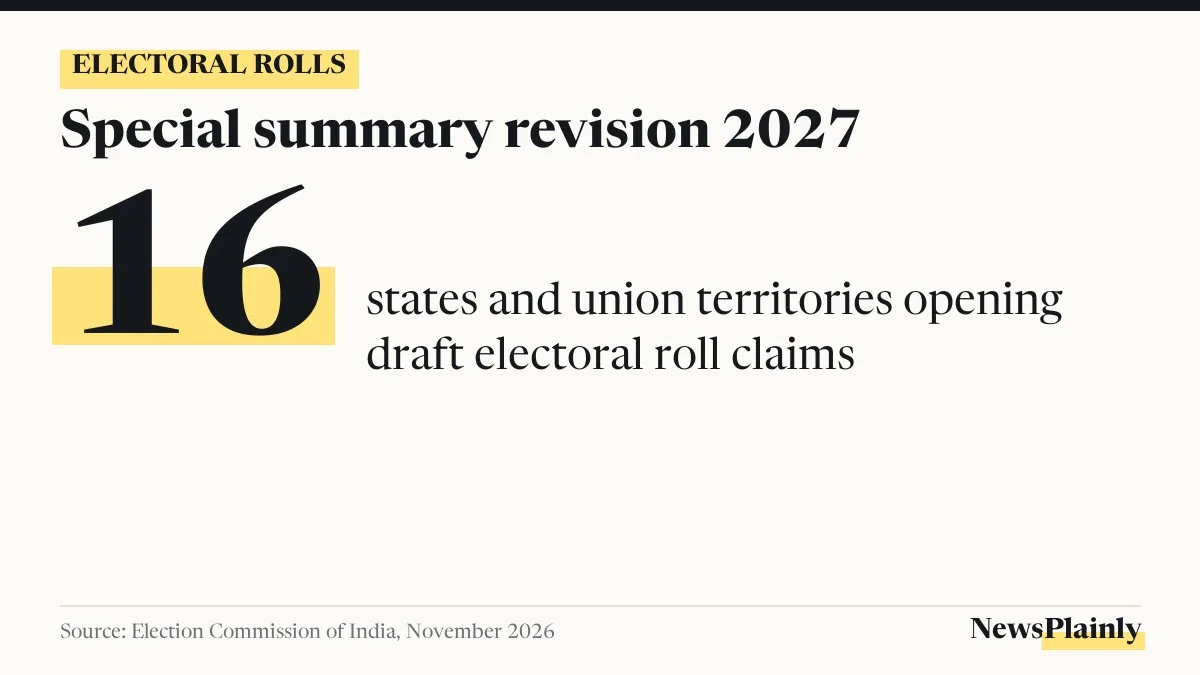
According to a detailed Hindustan Times report on the SSR rollout, senior election officials confirmed that the statutory process complies strictly with the Representation of the People Act 1950. The states participating in Thursday’s release include Assam, Bihar, Chhattisgarh, Goa, Gujarat, Kerala, Madhya Pradesh, Manipur, Punjab, Rajasthan, Tamil Nadu, Uttarakhand, and West Bengal, alongside the Union territories of Andaman and Nicobar Islands, Lakshadweep, and Puducherry.
Demographic numbers across participating states reveal steady progress. In Bihar, the ECI draft voter rolls list 75.5 million electors, an increase of roughly 1.3 million names compared to the post-intensive baseline. In Kerala, the list registers 27,360,254 voters, reflecting a gain of about 400,000 electors since the prior revision. Tamil Nadu currently accounts for 57.7 million registered voters, adding one million names back to its roll following significant deletions during the earlier audit.
Comparing state voter roll changes under the revision cycle
The impact of regular annual updates versus intensive cleansing exercises varies widely across regional electorates. The table below outlines registered elector counts and net changes documented in the latest ECI draft voter rolls across key states.
| State or Territory | Draft Registered Electors | Net Change From Post-Audit Roll | Key Demographic Factor |
|---|---|---|---|
| Bihar | 75.5 Million | Net addition of 1.3 million names | High youth enrolment in rural assembly segments |
| Tamil Nadu | 57.7 Million | Net addition of 1.0 million names | Urban voter re-registration in Chennai belts |
| Rajasthan | 52.67 Million | Stable baseline with minor additions | Extensive rural polling booth verifications |
| Kerala | 27.36 Million | Net increase of 406,610 electors | Overseas voter filings and youth additions |
| Assam | 25.20 Million | Net increase of 218,771 electors | Includes 287,233 voters aged 18 to 19 years |
| Manipur | 1.99 Million | Net increase of 33,700 electors | Re-enrolment following displacement reconciliations |
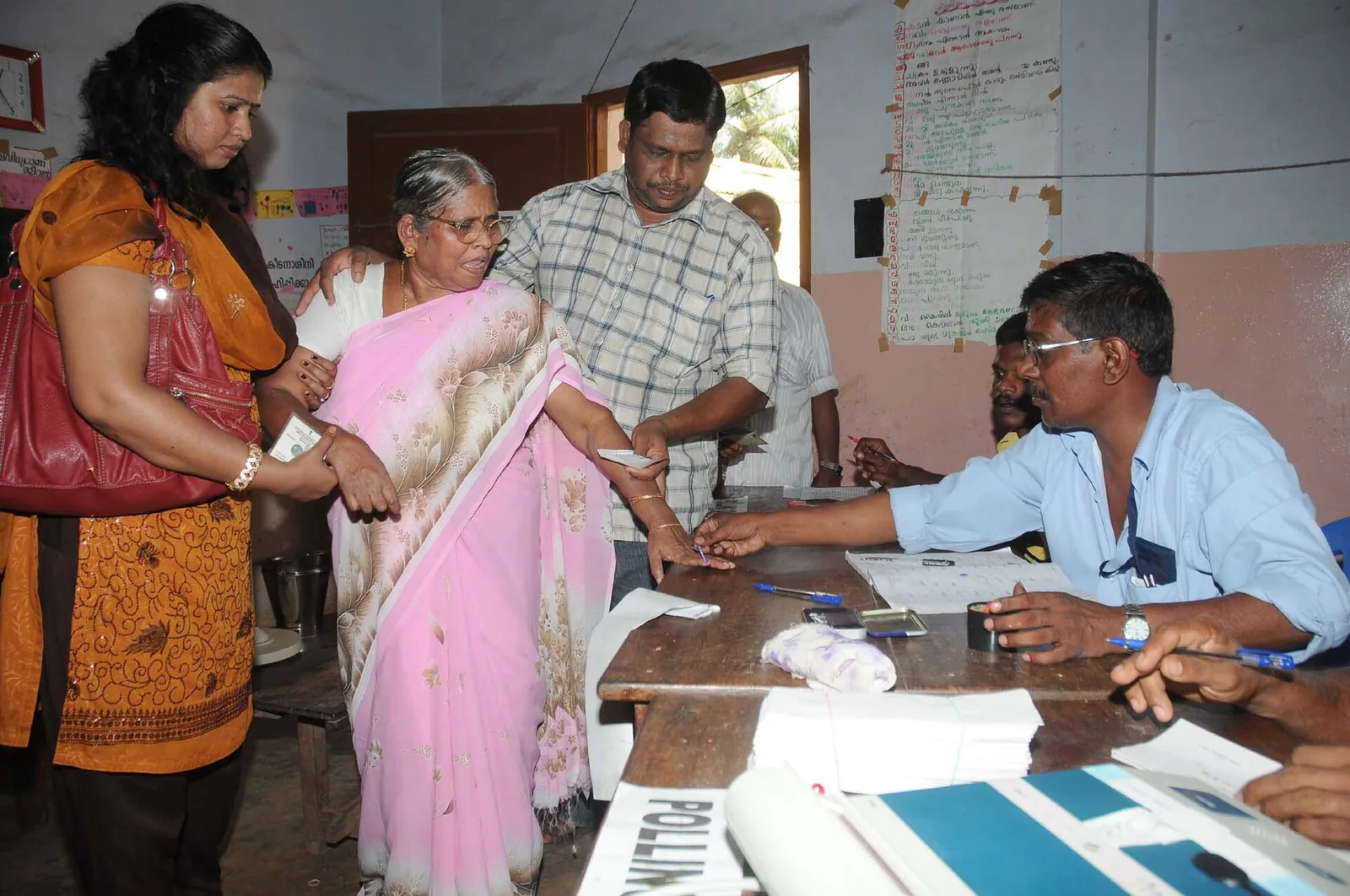
In Assam, where a Special Revision occurred rather than an intensive audit, the ECI draft voter rolls expanded to approximately 25.2 million individuals. Significantly, the state roster includes 287,233 young electors aged 18 to 19 years, underlining the success of educational institution tie-ups conducted by regional election officers. In Goa, election officers recorded roughly 43,000 additions alongside 11,000 deletions to maintain registry accuracy.
Citizens examining the ECI draft voter rolls should understand that publication is not a final ruling on eligibility. Rather, the draft serves as a public ledger designed to uncover clerical mistakes, spelling errors, or improper omissions before statutory deadlines expire. Recognizing political parties have also been provided complimentary soft copies of the draft lists to facilitate ground-level scrutiny through their respective booth agents.
How citizens can file claims and use Form 6
To facilitate universal access during the revision month, the commission has established both digital and grassroots verification mechanisms. Individuals can inspect the ECI draft voter rolls online via the national voter service portal or using the official mobile application. Hard copies of the draft lists are also available for physical inspection at designated polling stations, taluk offices, and block development centers.
First-time voters who turn 18 on or before 1 January 2027 must complete Form 6 to request fresh inclusion in the ECI draft voter rolls. The commission has also enabled advance applications for youth turning 18 later in the year, specifically on 1 April, 1 July, or 1 October 2027. These advance submissions are verified automatically as each prospective qualifying milestone approaches, eliminating repeated registration hurdles for young citizens.
Existing electors seeking corrections in personal details, residential address transfers within an assembly segment, or replacement voter identification cards can submit Form 8. If an elector wishes to raise a formal objection against the inclusion of an ineligible person, Form 7 can be submitted to the local Electoral Registration Officer (ERO). Local Booth Level Officers (BLO) are mandated to verify all incoming requests through physical field inquiries before forwarding recommendations to the ERO.
Special weekend camps will be organized across polling booths on 21 and 22 November, allowing families to verify multiple household entries simultaneously with local revenue staff. For related institutional perspectives and public administration coverage, readers can explore our reports in the NewsPlainly political desk or follow regional policy updates in our civic governance section.
With the 11 December deadline firmly established, civil society organizations and political parties are urging citizens to actively audit their entries in the ECI draft voter rolls. Checking voter standing now prevents unforeseen disenfranchisement when final updated registries are formally published on 4 January 2027 ahead of upcoming municipal and state assembly ballots.