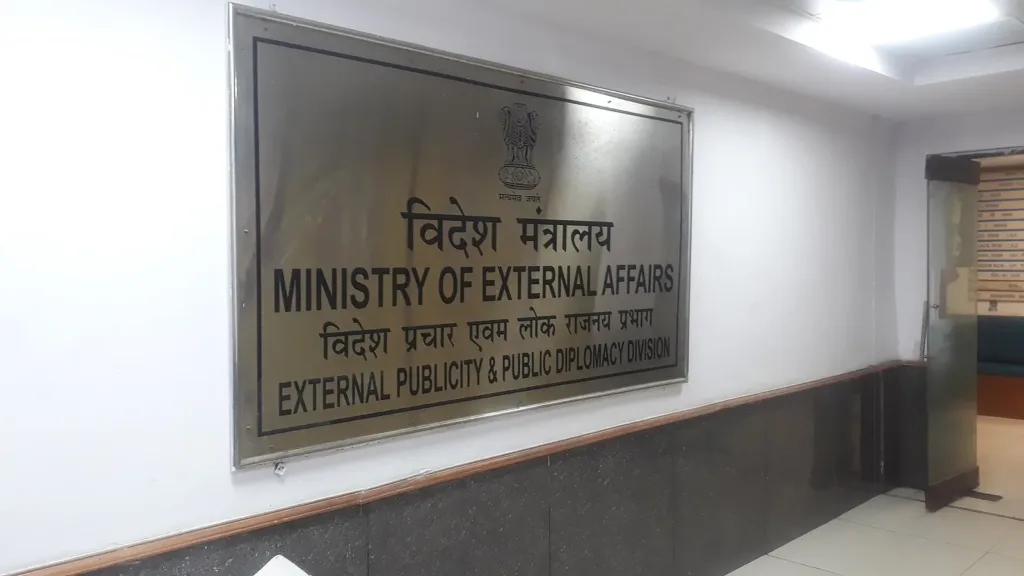
File photo, 29 August 2022: MEA office sign, Shastri Bhawan, New Delhi. Representative image. Pinakpani, CC BY-SA 4.0, Wikimedia Commons

Why it matters
The dispute concerns both serious allegations and the process for delivering court papers across borders. Separating those questions helps readers understand what the latest court step establishes.
India rejected the allegations in the Pannun lawsuit on 10 November 2026 and said requests to serve judicial documents in India must pass through the Ministry of Law and Justice. The response followed a United States court’s permission for Gurpatwant Singh Pannun to pursue service of his civil case on two senior Indian officials through Indian judicial channels.
Ministry of External Affairs spokesperson Randhir Jaiswal gave the government’s position at its regular briefing, according to The Hindu and Free Press Journal. He rejected the allegations against Indian officials and characterised the lawsuit as frivolous. The development concerns how court papers reach defendants, rather than a judgment establishing the alleged plot.
What India said about the Pannun lawsuit
Jaiswal identified the Law and Justice Ministry as India’s designated central authority for requests to serve judicial documents. His answer addressed the route for those requests as well as the government’s rejection of the underlying accusations.
Pannun’s civil case names National Security Adviser Ajit Doval and former Research and Analysis Wing chief Samant Goel. The Research and Analysis Wing is India’s foreign intelligence agency. Pannun alleges that Indian officials were involved in a plan to assassinate him in New York; India disputes the allegations.
According to Scroll’s account, Pannun is seeking damages. That makes this a claim for civil relief. Reporting on service of the case should therefore be distinguished from reporting on the separate US criminal investigation into an alleged assassination plot.
Pannun is associated with Sikhs for Justice, a separatist organisation banned in India. India designated him an individual terrorist in 2020 under the Unlawful Activities Prevention Act, Scroll reported. Those Indian designations are separate from what the American court is being asked to decide in his civil action.
What the 9 November court order requires
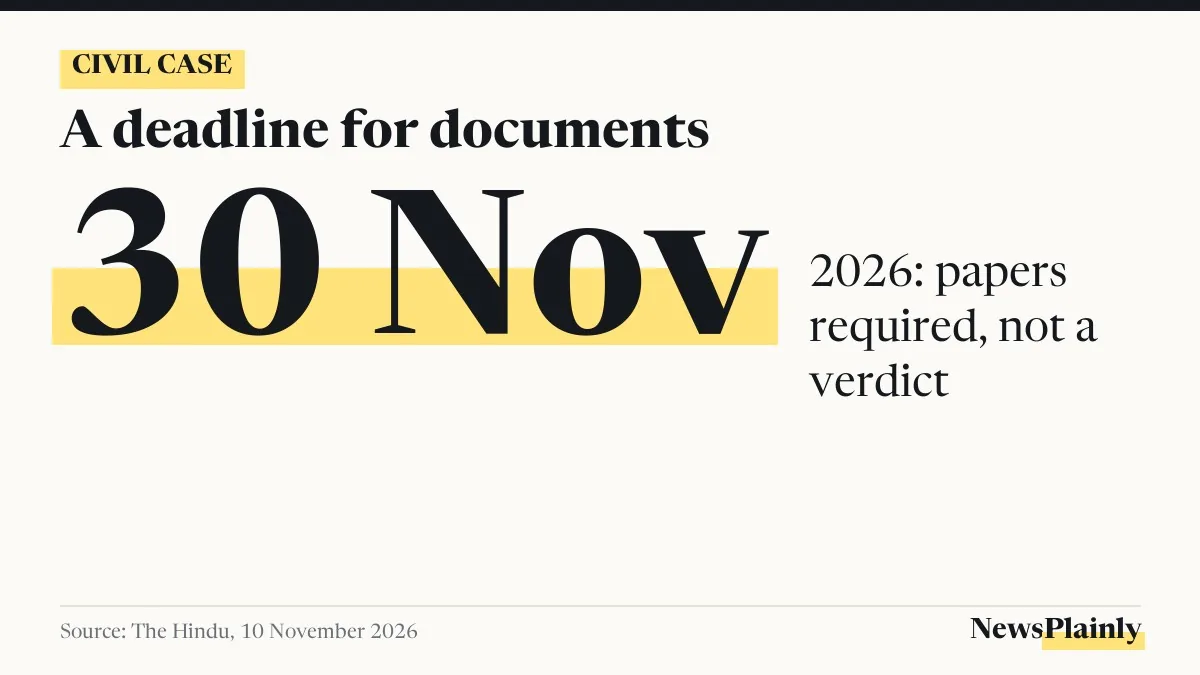
The Hindu reported that US District Judge Katherine Polk Failla gave permission on 9 November for Pannun to serve the case on Doval and Goel through Indian judicial channels. The report sets out a further paperwork deadline of 30 November 2026.
The required material includes summons addressed to the two officials, information on the applicable Indian law and procedure, the proposed route for service, and records of earlier service attempts under the Hague Convention. These details describe the steps the claimant has been asked to take; they do not establish that all those steps have already been completed.
The Hague Convention is the international framework referred to in the reporting on earlier attempts to deliver the documents. Jaiswal’s response stressed India’s designated channel. This article relies on the published accounts of the order and briefing; the original court order was not available in the material read for this report.
Three dates that describe different steps
The Pannun lawsuit has produced headlines about a court decision, diplomatic delivery and India’s reply. Keeping their dates and purposes apart helps explain what changed on 10 November.
| Date | Development | Meaning |
|---|---|---|
| 9 November 2026 | Failla permits service through Indian judicial channels | A procedural step reported by The Hindu |
| 10 November 2026 | India rejects the allegations and specifies its central authority | The government’s response at the regular briefing |
| 30 November 2026 | Deadline for documents described in the order | A paperwork deadline, rather than a trial verdict |
The State Department’s role also needs a separate explanation. The Hindu reported that it had delivered documents through the Indian Embassy in Washington and described that delivery as a legal obligation. Its filing said that performing the delivery did not mean taking a position on the case.
Service of papers does not settle the allegations
There are consequently two distinct questions in the latest development: whether the required legal documents are served through the permitted process, and whether the civil allegations are ultimately proved. The first is the subject of the reported procedural order. India’s response rejects the second and disputes the route described for judicial requests.
The next dated step in the reporting is the 30 November document deadline. It should not be described as a deadline for a conviction, a finding against the Indian government or a final decision on damages. Readers can follow related diplomatic developments in NewsPlainly’s India coverage.
Frequently asked questions
Did the US court find Indian officials guilty?
The reported order concerns service of a civil lawsuit, not a criminal conviction or a ruling proving its allegations.
Which Indian authority did the MEA identify?
Spokesperson Randhir Jaiswal said requests for service of judicial documents in India must be routed through the Ministry of Law and Justice.
What is due on 30 November?
The Hindu reports a deadline for summons and supporting documents about Indian law, the proposed service route and previous attempts.