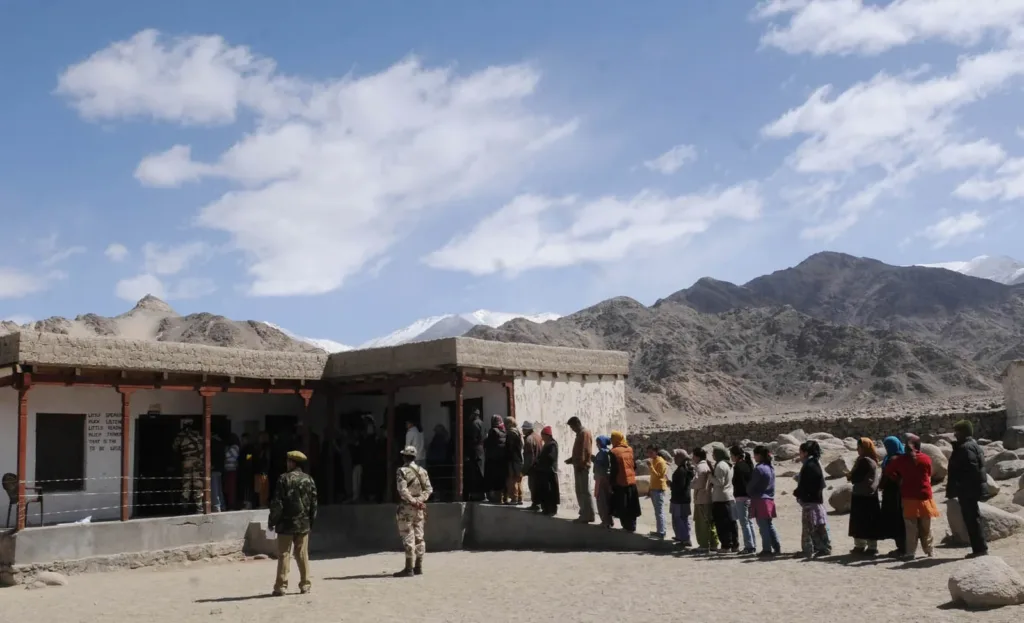
File photo, 13 May 2009: general-election voters near Thiksey in Ladakh, not the 2026 council polls. Representative image. Election Commission of India, GODL-India, Wikimedia Commons

Why it matters
The timetable separates the dates candidates must act from the day voters may go to the polls. Winter timing is disputed, but an objection to the schedule is different from an official postponement.
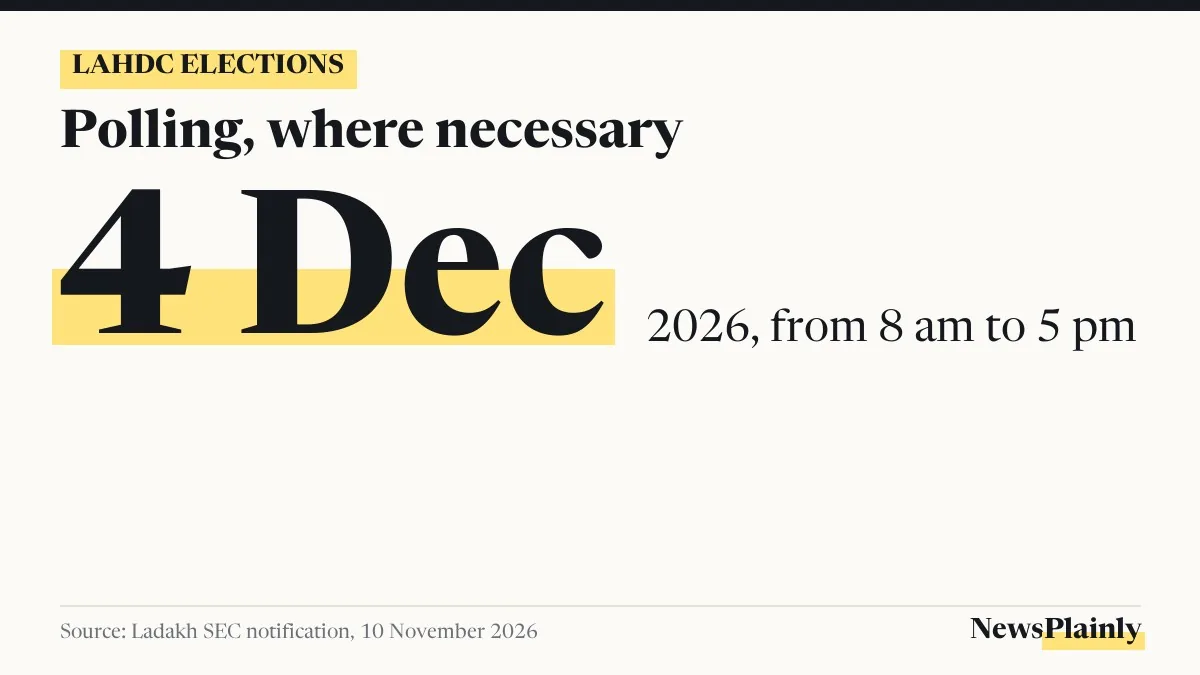
Ladakh council polls will be held on 4 December 2026, wherever voting is required, under a schedule issued by the State Election Commission on 10 November. Candidates have until 17 November to make nominations for the Ladakh Autonomous Hill Development Councils, with withdrawal allowed until 3 pm on 20 November.
The dates apply to the hill councils across the Union Territory. The New Indian Express and The Hindu reported that the exercise covers eight councils and 100 elected constituencies. Voters and prospective candidates should distinguish the nomination deadlines from polling day and from the separate deadline for completing the election process.
The official source is the commission’s notification published with General Administration Department Order 551-LA(GAD) of 2026. The three-page gazette document is dated 10 November and includes the complete timetable.
The Ladakh council polls calendar, stage by stage
The published notification identifies five stages. The nomination entry gives 17 November as the final date, with hours from 11 am to 3 pm. Scrutiny follows on 18 November at 11 am in the office of the respective Returning Officer.
A Returning Officer is the official responsible for conducting an election in the relevant constituency. Scrutiny is the examination of nomination papers. It is separate from the later opportunity for a candidate to withdraw.
| Stage | Date | Time or qualification |
|---|---|---|
| Last date for nominations | 17 November 2026 | 11 am to 3 pm |
| Scrutiny of nominations | 18 November 2026 | 11 am, respective Returning Officer’s office |
| Last date for withdrawal | 20 November 2026 | 3 pm |
| Polling | 4 December 2026 | 8 am to 5 pm, if necessary |
| Election process completion | 8 December 2026 | Completion deadline |
The polling entry is conditional: voting takes place where it is necessary. The final entry is a deadline for completing the elections. It does not, by itself, name 8 December as a separate polling date or give a counting timetable.
What the new notification establishes
The gazette first publishes the administration’s order and then encloses the commission’s schedule. The commission says the administrator has called on constituencies of the councils to elect members, under Rule 11 of the 2026 election rules. It appoints the dates under Rule 12.
That establishes an announced electoral programme. It does not establish who will contest, which candidates will win or whether a poll will be needed in every constituency. Those are different stages from issuing the timetable.
The New Indian Express reported that the schedule follows the notification of 100 elected constituencies across the eight councils. Its account describes an increase from the earlier 52 elected councillors. The elected-seat figure should not be confused with a total that includes nominated members.
Why winter timing has drawn objections
The announcement came as Kargil and Sankoo observed a shutdown opposing winter council elections, The New Indian Express reported. The concern raised by opponents is that cold-season migration could keep some residents away when voting takes place.
Kargil Democratic Alliance co-chairman Sajjad Kargili opposed a December poll, according to the report. Ladakh MP Haneefa Jan also urged the Lieutenant Governor and the commission to avoid winter timing, arguing that voters should have an opportunity to take part.
Those are the stated objections of the named political representatives. They are distinct from the dates now fixed by the commission. The official schedule read for this article continues to specify 4 December for polling where required; a demand for postponement is not itself a changed election date.
What the councils do for local residents
Deccan Chronicle described the councils as local elected bodies involved in district planning and the implementation of development programmes. Their work covers sectors such as education, healthcare, agriculture, tourism and local infrastructure.
The first Leh council was established in 1995 and the Kargil council followed in 2003, Deccan Chronicle reported. Today’s eight-council exercise extends the institution beyond that earlier two-council arrangement.
For prospective candidates, the immediate dated step is nomination by 17 November, followed by scrutiny and withdrawal. Voters have a later polling date. Constituency-specific arrangements should be checked with the election authorities; the timetable should not be treated as a substitute for a person’s polling-station details.
NewsPlainly’s politics coverage follows election announcements and confirmed changes to them. This report records the 10 November notification and the objections reported that day, without predicting how the councils will be constituted.
Frequently asked questions
When are the Ladakh hill council polls?
The commission’s notification sets 4 December 2026, from 8 am to 5 pm, wherever polling is necessary.
Is 8 December a second voting day?
The notice identifies it as the date by which the elections must be completed, rather than another polling day.
Has the winter objection changed the dates?
The official notification checked still lists 4 December. The New Indian Express reports opposition to winter timing, not a replacement schedule.