
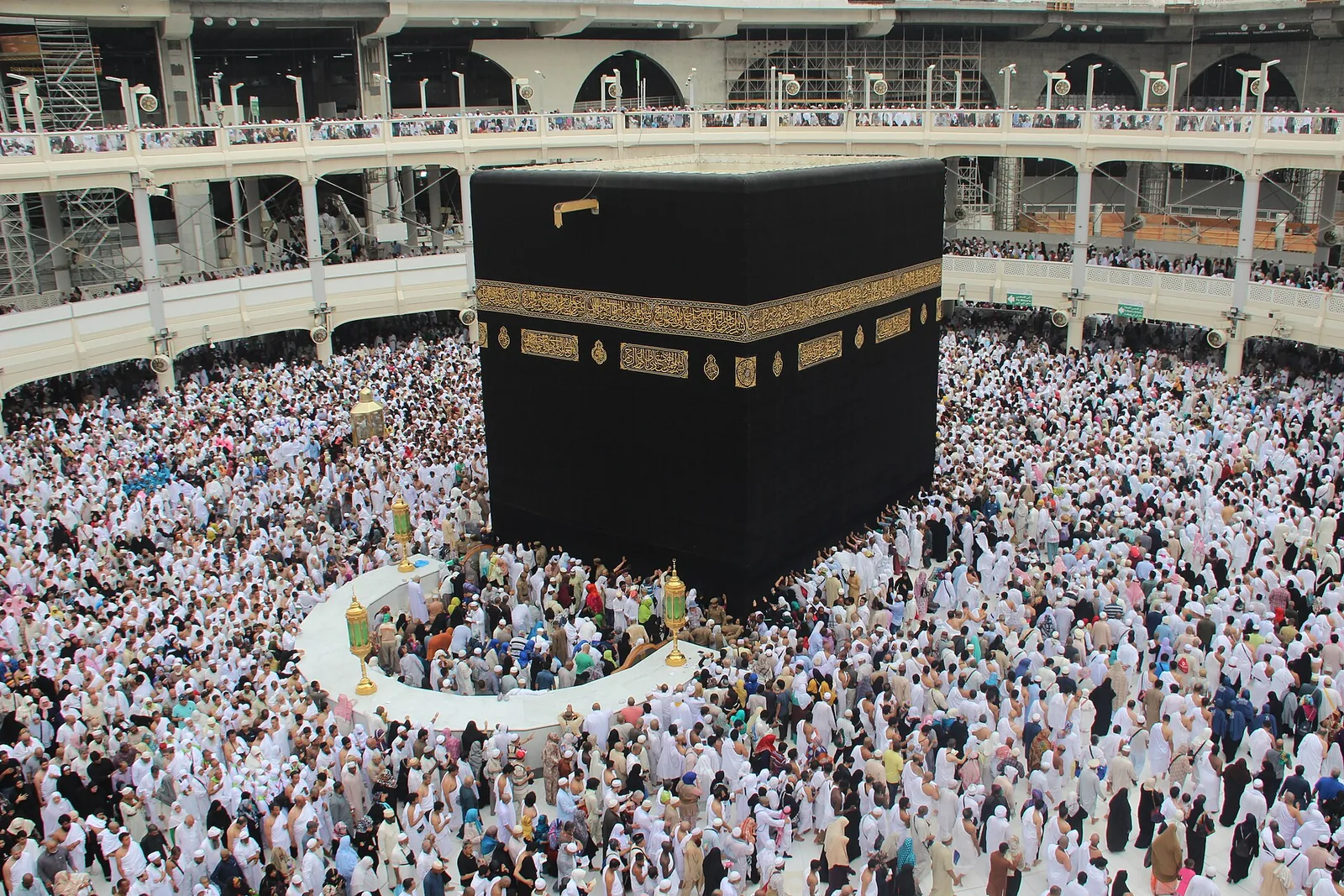
Representative image. Adli Wahid, CC BY-SA 4.0, Wikimedia Commons

Why it matters
A country allocation is different from an applicant’s confirmed place. Existing selection and document rules explain what the diplomatic announcement does and does not settle.
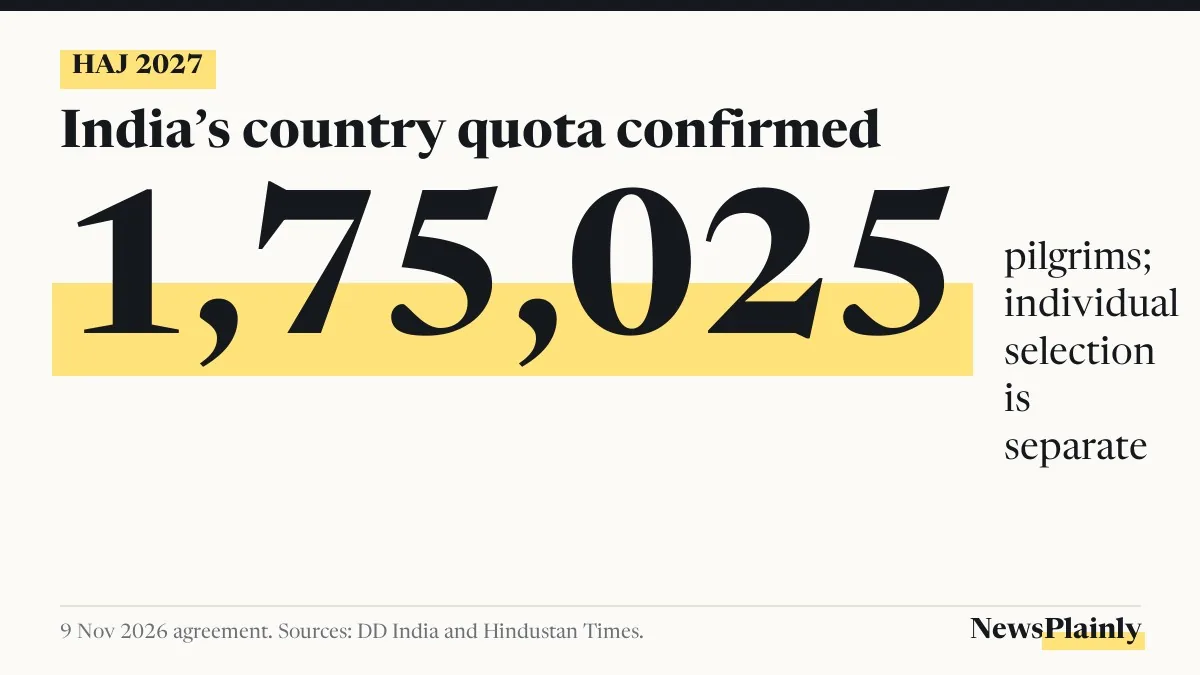
Haj 2027 quota for India has been confirmed at 1,75,025 pilgrims under an agreement signed with Saudi Arabia on 9 November 2026, Doordarshan’s international news service DD India reports. The country-level agreement sets the overall capacity; an applicant’s selection, documents and payment requirements remain separate steps.
Union Minority Affairs Minister Kiren Rijiju and Saudi Minister of Hajj and Umrah Tawfiq bin Fawzan Al-Rabiah signed the agreement after talks at the Jeddah Superdome. The ministers reviewed preparations and logistical coordination for the pilgrimage, according to DD India’s account of the visit.
Haj 2027 quota is a country allocation
Hindustan Times also reports the figure of 1,75,025, citing the Indian Consulate in Jeddah. It says the quota is unchanged from the allocation for 2025 and 2026. The signing is therefore confirmation of next year’s country allocation, rather than an announced increase.
The minister’s Saudi Arabia visit ran from 6 to 9 November. It included a review with the consulate, the Ministry of Minority Affairs and the Haj Committee of India, DD India reports. The stated focus was coordination and pilgrims’ welfare; the account does not establish the quality of services that every traveller will receive.
For an intending pilgrim, the useful next question is how the national quota becomes an individual place. That process is set out separately in the committee’s published Haj 2027 guidelines.
How the guidelines divide and allocate places
Section 15 of the guidelines allocates 70% of India’s total quota to the Haj Committee of India and 30% to Haj Group Organisers, the private-organiser channel. These are policy shares; the document does not justify treating a simple multiplication as the final rounded number of available seats in each category.
Within the committee’s allocation, places for State Haj Inspectors are subtracted before the remaining seats are distributed across states and union territories in proportion to their Muslim population. The guidelines then describe procedures for surplus places and further redistribution.
Where applications exceed a state or union territory’s quota, the committee uses Qurrah, a computerised draw of lots, for provisional selection. The guidelines prescribe priority categories and separate waiting lists. They tell waiting-list applicants to remain in contact with the committee or the relevant state or union territory committee about their status.
| Stage | What it establishes |
|---|---|
| India-Saudi agreement | The national quota for 2027 |
| Policy distribution | Allocation between channels and states |
| Selection or waiting-list status | An applicant’s position in the process |
| Documents and payments | Requirements for confirmation and continued eligibility |
Payment alone does not guarantee a seat
The Haj Committee guidelines explicitly distinguish provisional selection from confirmation. The payment section requires the specified documents to reach the committee through the prescribed process. It also says that paying the Haj amount alone does not guarantee a place.
False, incomplete or misleading information can lead to cancellation even after provisional or confirmed status, the document says. Missing the applicable document or payment deadline can also affect selection. Applicants therefore need the current circular relevant to their own stage, rather than treating the diplomatic agreement as an individual approval.
The guidelines identify the committee’s official website and Haj Suvidha app as its digital channels. They also say the committee coordinates with state and union territory Haj committees and does not authorise private individuals or agencies to act on its behalf. That warning concerns claims of committee affiliation; it is separate from the recognised private-organiser channel.
The final cost is a different announcement
The guidelines say the final Haj 2027 cost will be determined after service contracts are finalised in India and Saudi Arabia. They include earlier-year airfare and total-cost figures for reference, with an explicit warning that actual 2027 costs depend on procurement rates.
An old cost table is consequently not a confirmed new package price. Nor do the signing reports reviewed announce a new application window or supply a fresh individual payment deadline. The agreement, selection status and travel cost each answer a different question.
NewsPlainly’s India coverage follows public-service announcements and the conditions readers need to distinguish from headline numbers.
Frequently asked questions
Did the agreement increase India’s Haj quota?
The reported 1,75,025 allocation is unchanged from 2025 and 2026.
Does paying guarantee a seat?
No. The official guidelines require complete, truthful information and the prescribed documents and payments.