Representative image. Photo: Phil Bus, CC BY-SA 2.0, via Wikimedia Commons

Updated
Why it matters
Maize is the main ingredient in chicken feed, so a tug of war over the grain can raise what families pay for chicken and eggs. Maize farmers may also see weaker demand from distilleries after the price cut. The decision to keep sugar out of petrol is meant to protect sugar supplies and prices in a drought year.
The government has cut the extra price it pays for maize ethanol to ₹2.79 a litre from ₹5.79, in a new fuel tender that also shuts out ethanol made from sugar. The 2026-27 tender, issued on 16 October 2026, has set off a scramble for maize between poultry farmers, distillers and starch makers at a time when drought has shrunk the crop, The Economic Times reported on 21 October.
What the 2026-27 ethanol tender changes
Bharat Petroleum issued the tender on behalf of the state-run oil marketing companies, according to a PTI report. It asks for about 1,100 crore litres (11 billion litres) of ethanol for the supply year running from 1 November 2026 to 31 October 2027. That volume is meant to keep petrol at the 20% ethanol blend, known as E20.
No bids are being sought for ethanol made from sugarcane juice, sugar syrup or B-heavy molasses. The tender document says the government has directed that sugar diversion for ethanol be cut to zero for the year, Deccan Chronicle reported. Distillers can still bid with maize, broken rice, surplus rice held by the Food Corporation of India (FCI) and C-heavy molasses, a by-product left after most sugar has been extracted.
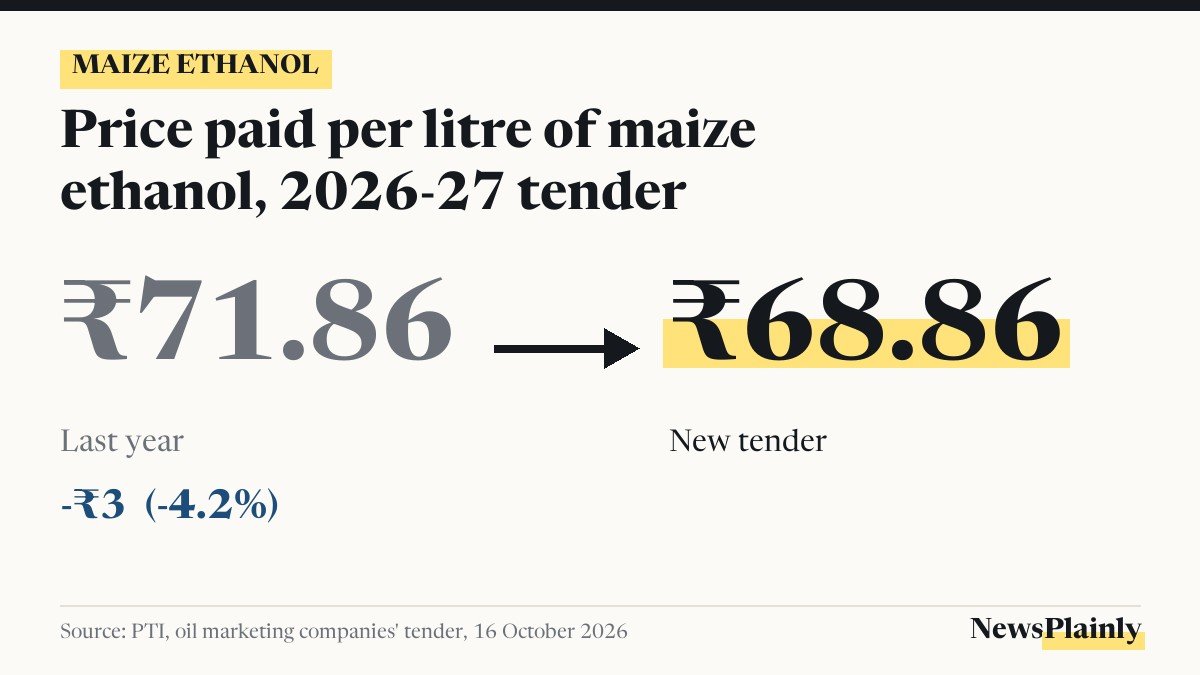
The purchase price for maize ethanol drops to ₹68.86 a litre from ₹71.86. That is a cut of ₹3, or roughly 4%, on every litre of maize ethanol a distillery sells to the oil companies.
Why sugar was taken out of petrol blending
Poor rainfall in Maharashtra and Karnataka, both major sugarcane states, has raised fears of a smaller sugar harvest. The Centre wants to keep enough sugar in shops and hold prices down through the festive season, PTI reported.
The margin is thin. Net sugar output last season only just covered domestic demand of 280 to 285 lakh tonnes, Swarajya reported, and the new rule takes more than 250 crore litres of sugar-based ethanol out of the supply chain. Grain, and maize ethanol in particular, now has to fill most of that gap.
How the maize ethanol push squeezes poultry feed
Maize is the main ingredient in chicken feed, making up 55% to 65% of broiler feed by weight. Poultry farmers were paying ₹27 to ₹28 a kg for the grain in late September, against ₹12 to ₹14 in 2019, The Wire reported, citing Mint. In plain terms, feed maize now costs about twice what it did seven years ago.
The weak monsoon has made things worse. Narendra Pasuparthy, founder of the meat retailer Nandu’s, estimated that Karnataka’s maize output had fallen about 25% this season because of drought-damaged crops, according to the same report.
The National Egg Coordination Committee (NECC) told the government in a letter last week that poultry feed normally uses about 55% to 60% of India’s maize, which puts it in direct competition with ethanol plants, The Economic Times reported. GK Sood, a senior agricultural expert quoted by the paper, argued that food and feed should get priority, and warned that heavy use of maize for fuel could leave India importing starch from China.
Distillers say rice will crowd out maize
Ethanol makers see the tender very differently. The Grain Ethanol Manufacturers Association (GEMA) said that, without sugar in the mix, the tender leans heavily on cheaper rice-based feedstocks such as surplus and damaged foodgrains, and could shrink the role of maize ethanol.
GEMA president CK Jain said oil companies may first buy surplus grain up to its cap, then damaged grain as the next cheapest option, leaving little room for maize. Cutting the maize incentive while cheaper rice is available, he said, weakens the economics of maize-based production and the market it gives farmers.
So the two industries are pulling in opposite directions. Poultry wants less maize going into fuel. Distillers want the oil companies to keep buying maize ethanol in volume so their plants stay busy.
What maize farmers and shoppers should watch
For maize growers, a lower ethanol price could mean distilleries bid less for their crop, though the drought-driven shortage is pushing prices the other way for now. For households, feed costs feed straight into chicken and egg prices. Crisil Intelligence data showed the cost of a home-cooked non-vegetarian thali rose 6% year on year to ₹59.50 in September, The Wire reported.
The next signals will be how much maize ethanol the oil companies actually award in this first tender, and whether the government responds to the NECC and GEMA representations before supplies start on 1 November. Higher fuel blending has been part of India’s plan to cut its crude oil import bill, which NewsPlainly covered when Brent crude climbed to $110.
Frequently asked questions
Why was sugar-based ethanol excluded from the 2026-27 tender?
Poor rainfall in Maharashtra and Karnataka raised fears of lower sugar output, and the government directed that sugar diversion for ethanol be cut to zero to protect domestic supply and prices.
What is the new price for maize ethanol?
Oil companies will pay ₹68.86 a litre for maize-based ethanol, down from ₹71.86, after the incentive was cut to ₹2.79 from ₹5.79.
Will chicken and egg prices rise?
Maize makes up 55% to 65% of broiler feed, and poultry farmers were paying ₹27 to ₹28 a kg in late September. Poultry bodies warn that more competition for maize will raise feed costs, which usually show up in retail prices.
When does the new ethanol supply year start?
Supplies under the tender run from 1 November 2026 to 31 October 2027, in four quarterly phases.