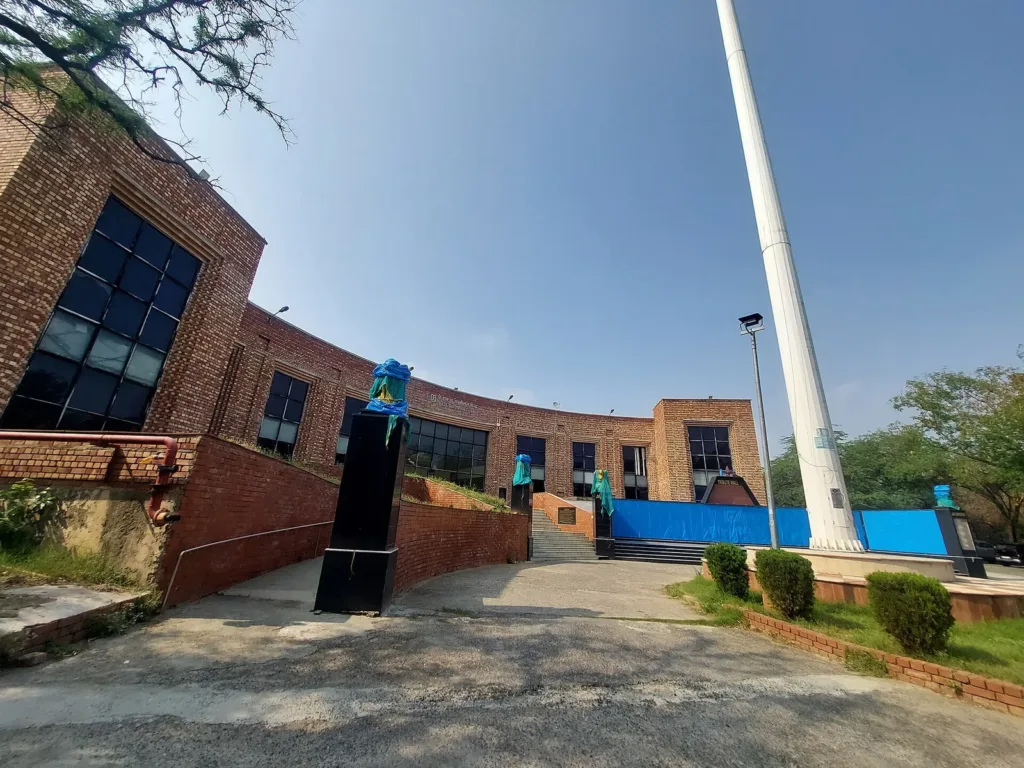
Representative image. Khanahmedsam, CC BY-SA 4.0, Wikimedia Commons

Why it matters
The case turns on how a university ran a sexual harassment inquiry: whether the accused gets the report and time to appeal before action is taken, and how the identities of complainants are protected. Until the High Court decides, a sitting MP's job at JNU stays in dispute, and the complaints remain unresolved in court.
The Delhi High Court on Monday, 2 November 2026, stayed Jawaharlal Nehru University’s order dismissing professor and Congress MP Bimol Akoijam, who was removed from service on 9 October after an inquiry into sexual harassment complaints by students. Justice Anup Jairam Bhambhani passed the interim order on Akoijam’s petition, issued notice to JNU and listed the case for hearing in January 2027, LiveLaw reported.
The stay pauses the dismissal while the court hears the case. It is not a ruling on the complaints, which Akoijam denies, and a separate Delhi Police investigation continues. More court and campus stories are in our India section.
What the Delhi High Court did on 2 November
Bimol Akoijam, whose full name is Angomcha Bimol Akoijam, represents the Inner Manipur seat in the Lok Sabha. He taught at JNU’s Centre for the Study of Social Systems in the School of Social Sciences.
In court, he argued that no notice was issued to him before the university decided to dismiss him, according to Bar and Bench and ThePrint. The judge stayed the JNU dismissal order and asked JNU to respond to the petition. Advocate Moirangthem Gunedhor Singh argued for him, Bar and Bench reported.
In the Akoijam case, Bar and Bench, LiveLaw and ThePrint all gave January 2027 as the next hearing. None of the reports read gave an exact date, and the written order was not available to NewsPlainly when this article was prepared.
Why JNU dismissed Bimol Akoijam
At least 11 women students complained to JNU’s Internal Committee in May 2026, LiveLaw and ThePrint reported. The Times of India put the date of the complaints at 18 May. The committee, set up under the law against sexual harassment at the workplace, held an inquiry and recommended a major penalty.
On 9 October the university dismissed him with immediate effect. The order, signed by Vice-Chancellor Santishree D. Pandit, said that after “following the due process” and going by the Internal Committee’s report, “the punishment of dismissal from the services of the university is hereby imposed”, according to the text printed by The Hindu and the Times of India.
The Hindu reported that the order relied on Rule 11(ix) of the Central Civil Services (Classification, Control and Appeal) Rules, the service rules that list the penalties a government employer can impose.
Two days later, on 11 October, Delhi Police registered an FIR (first information report, the first step in a police case) at Vasant Kunj North police station on a complaint by JNU’s chief security officer, the Times of India and Dainik Bhaskar reported. The case was registered under sections 75 and 79 of the Bharatiya Nyaya Sanhita, which deal with sexual harassment and with words or acts meant to insult a woman’s modesty. Police have said the investigation is on. No charge sheet was mentioned in any of the reports read.
What Akoijam says about the inquiry
Bimol Akoijam has denied the allegations. He has called the proceedings politically motivated and said the inquiry had procedural lapses, Bar and Bench and The Hindu reported. At a press conference at his home in Imphal after the dismissal, he described the case as a “witch hunt”, the Times of India reported.
His objections to the process, as reported, fall into three parts:
- The report: he said he was told by email on 9 October that the inquiry was over, but did not receive the committee’s report with its findings, Dainik Bhaskar reported. Within hours, he said, the dismissal order was issued.
- The right to appeal: he said both sides should get the report and 30 days to appeal against its findings, and that skipping this step hurt his legal rights.
- Confidentiality: he accused the university of breaking Section 16 of the Sexual Harassment of Women at Workplace Act, 2013, which bars making public the identities and details of a complaint and inquiry, the Times of India reported.
In a post on X, he also disputed JNU’s account of how far he cooperated with the inquiry, the Times of India reported. JNU’s order, as quoted in the reports, says due process was followed.
Bimol Akoijam case: timeline from May to January 2027
| Date | What happened | Reported by |
|---|---|---|
| 18 May 2026 | At least 11 women students complain to JNU’s Internal Committee | Times of India (LiveLaw, ThePrint: May) |
| 31 May 2026 | Akoijam says he filed his written reply | His own account, via Times of India |
| 16 July 2026 | Akoijam says he gave his deposition | His own account, via Times of India |
| 9 October 2026 | JNU dismisses him with immediate effect | All reports read |
| 11 October 2026 | FIR registered at Vasant Kunj North police station | Times of India, ThePrint, Dainik Bhaskar |
| 13 October 2026 | BJP women MPs meet President Droupadi Murmu seeking action | India Today |
| 2 November 2026 | Delhi High Court stays the dismissal, notice to JNU | Bar and Bench, LiveLaw, ThePrint |
| January 2027 | Next hearing (exact date not reported) | Bar and Bench, LiveLaw, ThePrint |
What the Delhi High Court stay means for the Akoijam case
An interim stay puts the university’s order on hold until the court decides the petition or changes its order. The reports read do not say whether Akoijam will return to teaching in the meantime or what JNU will argue in reply.
The kind of penalty matters. Under Rule 11 of the service rules, penalties are either minor, such as censure or a withheld increment, or major, such as compulsory retirement, removal or dismissal. The Times of India noted that dismissal usually bars a person from future government jobs, while removal does not.
The Akoijam case now runs on two separate tracks. The Delhi High Court is looking at JNU’s dismissal order and how it was reached. The FIR is a criminal matter that Delhi Police are investigating, and an FIR is not a finding of guilt.
The political row in Manipur and Delhi
The Akoijam case has become a political fight. Manipur Chief Minister Y. Khemchand Singh asked Akoijam to resign from the Lok Sabha after the dismissal, saying he had lost the moral authority to stay on, the Times of India reported. On 13 October, a group of BJP women MPs met President Droupadi Murmu and sought action against him, India Today reported. BJP women’s wing workers marched to Congress Bhavan in Imphal on 10 October demanding his resignation, according to India Today.
Bimol Akoijam has said he would quit Parliament if the allegations were proved, India Today reported. Former chief minister N. Biren Singh has questioned Rahul Gandhi’s support for the MP, India Today and the Times of India reported. For now, the JNU dismissal order stays on hold until the Delhi High Court hears the case in January.
Frequently asked questions
Why did the Delhi High Court stay Bimol Akoijam's dismissal?
Akoijam argued that no notice was issued to him before JNU decided to dismiss him, Bar and Bench and ThePrint reported. The court stayed the order as an interim step and asked JNU to respond.
Does the stay mean the allegations were found false?
No. An interim stay only pauses the dismissal while the case is heard. The court has not ruled on the complaints, and a Delhi Police investigation is separate.
When is the next hearing in the Akoijam case?
In January 2027, according to Bar and Bench, LiveLaw and ThePrint. The exact date was not in the reports.